PragerU · UX & Product Director
PragerU
Fixing the process, then building on it.
Overview
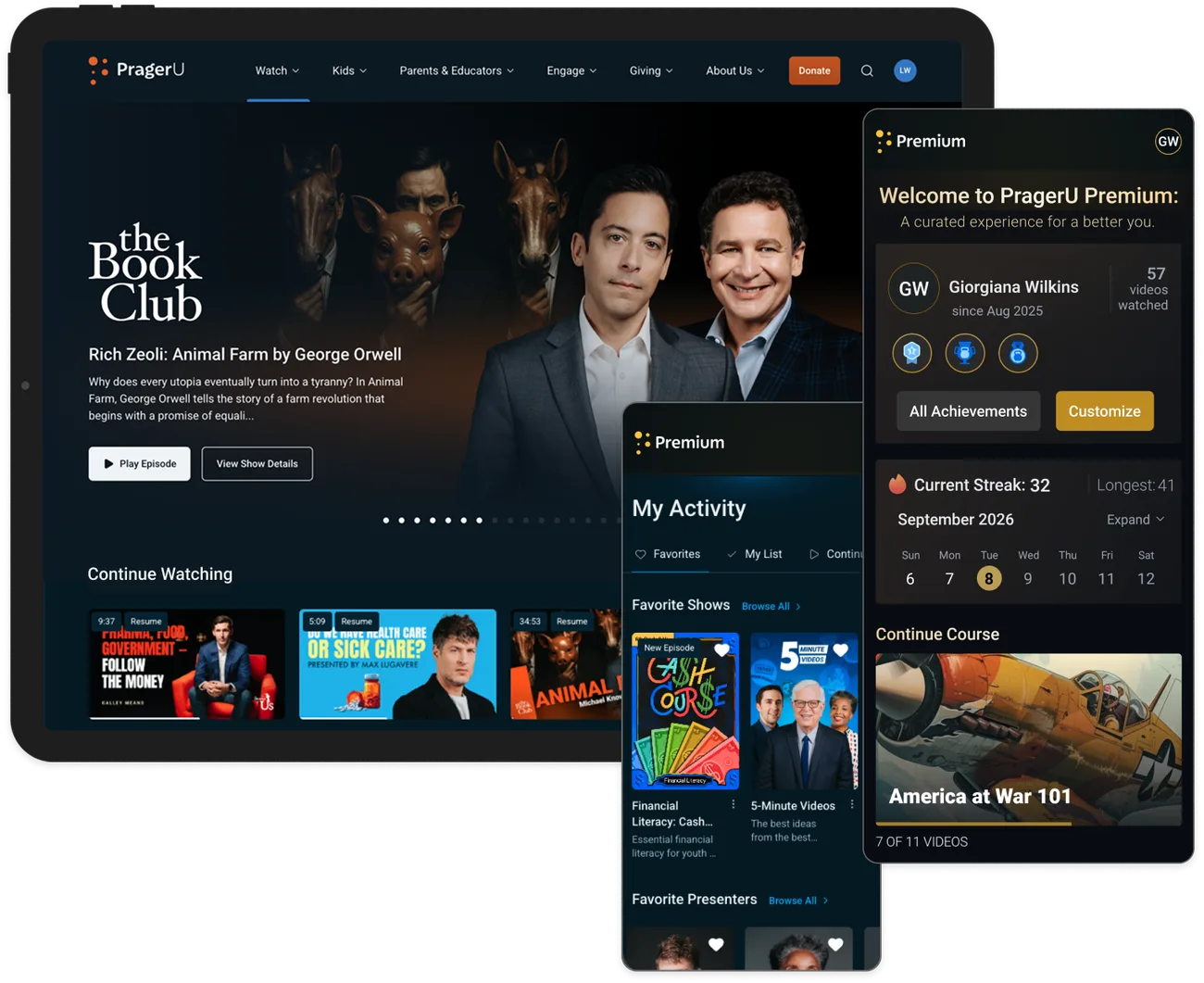
PragerU had 2,000+ free videos, a 13-year-old site strategy, and one user journey: watch a video and leave. 97% of visitors did exactly that. Behind the site, content moved through a production chain with no clear owners, and product work ran through external vendors. Across web, mobile apps, and OTT, I led the design and product work that followed: a new content architecture, a captioning and WCAG baseline, targeted cross-promotion, a post-video reaction flow, logged-in recommendations, and a Premium learning layer.
I'd already proposed a new content architecture when leadership, facing a dip in donations, mandated Premium, a gamified learning center. Premium couldn't work without that structure, so I used the mandate to move it from proposal to production, along with the other foundations Premium needed. Each piece delivered value to every user whether Premium succeeded or not.
Results: Video page engagement up 36%. Online donations up 12%. Return-visitor account creation up 16%. WCAG compliance up from 55% to 85%. Publishing workload down 24%.
The tension
Viewers couldn't browse. The library carried more than 700 unmanaged topics and no reliable categories, and nothing pointed them to a next step after a video.
Producers spent too much time categorizing content. Copy and creative often arrived late or changed at the last minute, and releases slipped as a result.
Approvals waited on executive review, which could take days, and review authority wasn't delegated.
Vendors built our products without the context behind our decisions. They worked in good faith, but their pushback sometimes added weeks to timelines.
Leadership needed a new revenue story and saw Premium as the answer. No one had tested demand with users or the market.
Accessibility had no baseline. Many videos shipped without captions, and new code had no WCAG standard.
I was running 6–11 concurrent initiatives as priorities shifted. The team was me as UX director, a contract designer, and external vendors for web, mobile, and OTT, including 2 engineers and 1.5 project managers. In late 2024, an in-house CTO, data analyst, developer, and project manager joined.
Research
I designed for two users: the viewer, and the team producing and publishing the content.
Viewers
Analytics showed that 97% of sessions ended after a single video. There was no path to a second video, an account, or a donation. 73% of surveyed users preferred browsing by category over search or feeds.
The team
I surveyed the team about their biggest time investments with the lowest return, and where the process broke. I'd run a similar exercise at NBC, where a survey became the design team's charter. This time the goal was to remove bottlenecks. Most of the breakpoints sat upstream of the web team and outside its direct control. I documented each one with specific examples of missed handoffs and late changes. Everyone knew these failures existed. Naming them, with evidence, is what made them fixable.
Premium
No user or market research preceded the Premium build. That gap shaped how I scoped it.
The call
I turned the breakpoints into structural change.
Documenting the failures led to three changes. First, the case for a new content architecture, which I proposed then and built once Premium made it a priority. Second, every stage from post-production through copy, creative, marketing, and publishing got a named owner, a visible handoff, and a deadline. Third, leadership hired a DAM specialist and adopted an end-to-end asset system.
I designed the taxonomy for adoption, not perfection.
Producers and executives would only accept a system that added almost no work. I built a three-tier structure that let a video belong to more than one topic, and the 700+ topics became 25 core categories. Automated curation and captioning cut publishing workload 24%.
I used the mandate to fund the foundation.
Premium's personalized learning paths depended on structured content and logged-in history. The taxonomy I'd proposed became a prerequisite, so it finally got resources. I sequenced it with logged-in features, recommendations, and captions, and each shipped on its own for every user. If Premium stalled, the investment would still pay off.
I made accessibility a release requirement.
I worked with Mux to get PUF into their captioning service beta. Even if it didn't work 100% of the time it was better than continuing to ship hundreds of videos with no captioning at all. Every new video shipped with .srt or .vtt captions, and all new code had to meet a WCAG baseline before release. Auto-generated captions significantly cut the web team's workflows, and editorial review of captions added less than 3% to any workload.
I made the case for an in-house technology team.
For two years I directed our web, mobile, and OTT vendors: approving work, providing hands-on designs, giving usability direction, testing the features they proposed, and designing the logic for automated workflows. We worked hard to bring design thinking into that relationship, but distance and missing context kept slowing it down. The case I built from that experience helped lead to hiring a CTO, a data analyst, a developer, and a project manager, plus contract developers. For the first time, design could sit with engineering and develop ideas together.
I kept the Premium risk visible and offered alternatives.
I kept asking the same question through the build: if every video is free, what would entice someone to pay? I recommended market research to test whether demand existed, and if so where the biggest wins would be. I also recommended adding very basic features a viewer would expect from a streaming service, and suggested exclusive paywalled content, live Q&As, extended interview cuts, and cross-platform sync. Leadership was already set on gamification with badges, streaks, and personal goals. A few basic "table stakes" features were budgeted in: continue watching, favorites, and recommendations.
What shipped
A library people can browse
25 categories gave viewers direct access to the topics and discussions of preference.









A next step after every video
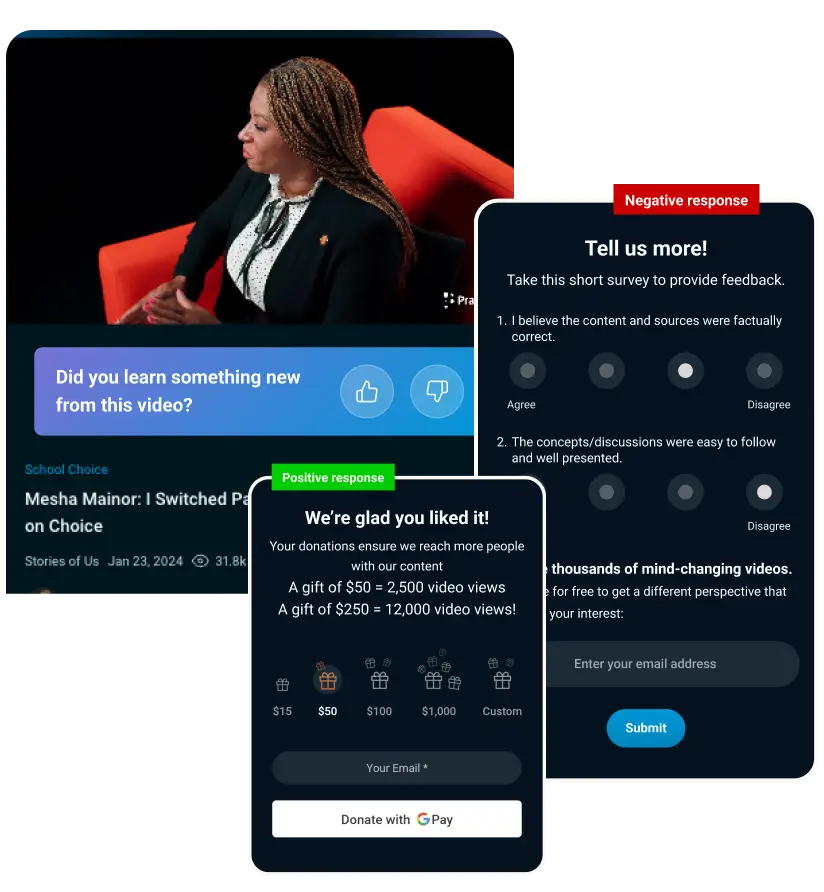
Promos could target all videos, a series, a topic, an age group, or a single video. After each video, a thumbs-up led to a donation ask, and a thumbs-down opened a feedback form and better-matched recommendations.
Recommendations and the Premium layer
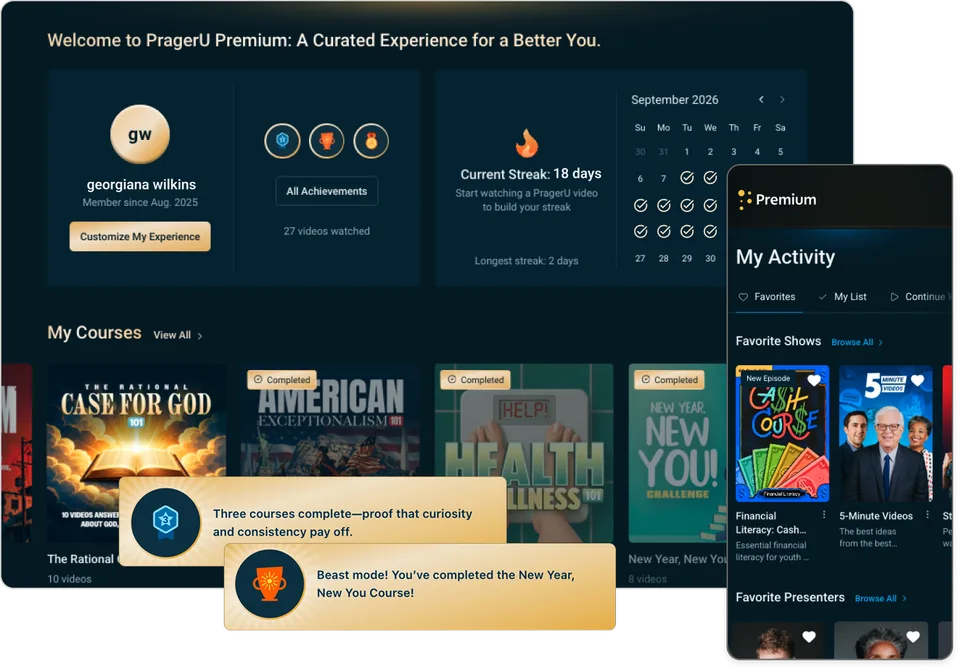
Viewing history, goals, and favorite topics and personalities powered recommendations across the site and resurfaced evergreen content without extra editorial work. Premium added badges and achievements for streaks and course completion.
The results
- +36%
- Video page engagement when a cross-promotion was displayed.
- +12%
- Online donations after the reaction flow launched.
- +16%
- Account creation by return visitors.
- +30%
- Increase in WCAG compliance, with captions on every video and accessibility complaints down 60%.
Reflection
A mandate can carry the work users need. The taxonomy sat as a proposal until Premium gave it a reason to be built. Premium itself didn't find its audience: preliminary results showed low conversion among existing users and few daily return visits. The foundation underneath it drove every result above. I recommended market research before the build. Next time, I'd propose something faster that fits inside a mandate's timeline, like a waitlist or fake-door test, and agree on a go/no-go conversion rate up front.
Transparency doesn't fix approval bottlenecks. Visible handoffs made delays easier to see. Time and cost could be assigned to these delays, but executive review stayed the slowest step. I proposed naming approvers with clear thresholds for each type of change, so only the highest-stakes work waits for the top, to no avail. Had I known it was closed to consideration, I wouldn't have spent 10 minutes on the problem.
Quantify friction early. Making the case for an in-house team took two years. Next time, I'd track the hours/days/weeks that vendor back-and-forth added to each release from day one, so the cost of the status quo is visible in the first quarter, not the eighth.
Connect
Let's talk about what we can build together.
- Design, strategy and component architecture at scale
- AI-assisted builds, from sketch to working product
- Ask me about WCAG, I treat accessibility as a requirement
About
Hello, I'm Lisa.
I've been a UX director, strategist, and AI-native builder for enterprise-level companies with 1.5M daily users, for mid-size trades and nonprofits, and small, solo-founder companies across the West. At any scale I distill input into something that solves for the user and moves the business forward.
I live in the Sonoran Desert, which inspires me daily with its surface simplicity and underlying complexity. I'm grounded and nerdy: ask me about WCAG compliance or anything equestrian and you'll get the same enthusiasm. I'm most proud of raising a son full of gratitude and spoiling some very good horses.